
[ad_1]
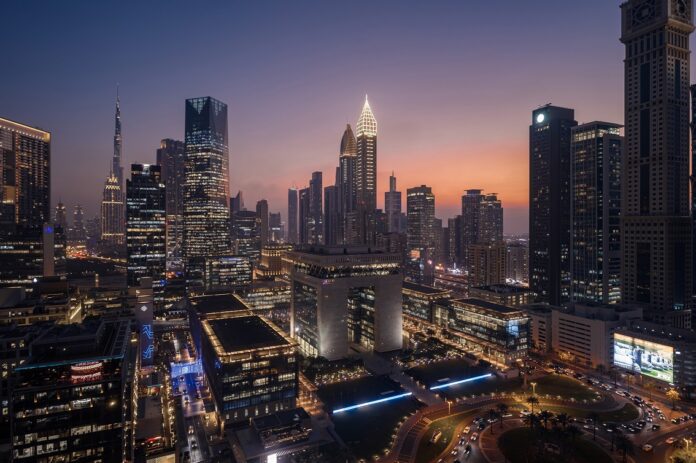
- First report in six-part Future of Finance collection highlights rising traits, shifting capital flows and high-growth alternatives within the international monetary panorama
Dubai International Financial Centre (DIFC), the main international monetary centre within the Middle East, Africa and South Asia (MEASA) area, in collaboration with its analysis associate Asia House, reveals the important thing drivers behind the deep and broad transformation of the worldwide monetary companies business throughout sectors and geographies in a report titled The Global Finance and Investment Outlook: Charting technological shifts and new international flows.
The first report has been knowledgeable by complete network-based analysis in addition to first-hand views of world financial services leaders who’re a part of DIFC’s monetary companies associated ecosystem. It highlights international monetary traits shaping the move of capital and expertise, reveals rising development corridors, discusses geoeconomic uncertainties, and offers an overarching outlook for the way forward for the business.
Commenting on launch of the report collection, Salmaan Jaffery, Chief Business Development Officer, DIFC Authority, mentioned: “The global financial services industry is in a new era. Through our Future of Finance series, we will share insights on how the industry is experiencing rapid and far-reaching transformation, fuelled by a redrawing of the global capital landscape. Our inaugural report discusses a shift of the economic centre of gravity eastwards, the emergence of new economic corridors, expectations from talent, and the revolutionary impact of AI. Against this backdrop, Dubai and DIFC hold a distinctive position in the future of finance as the gateway to the region’s emerging economies and a centre for global wealth and capital, strategically positioned between East and West.”
Michael Lawrence OBE, Chief Executive, Asia House, added: “The global financial services sector is evolving rapidly in the face of geographical and structural shifts and advances in technology. The Future of Finance series examines the impact of these profound changes and the way in which financial services are adapting. Our first report explores the key trends and risks that need to be at the forefront of thinking among global finance leaders. We are delighted to be partnering with DIFC in this important research.”
Strong outlook for finance and funding
The report states that in an evolving financial surroundings, monetary companies companies are in search of an surroundings that’s conducive to scalable development, with forward-thinking rules, a robust authorized framework, strategic location and high-growth alternatives backed by expert expertise and innovation readiness. Shifts in capital allocation and rising investor curiosity in non-public markets are additionally explored with Dubai positioned favourably because of its standing as dwelling to the area’s highest focus of wealth. DIFC offers monetary companies firms entry to USD 4trn price of personal and household wealth, and is taking part in an essential function in changing these massive swimming pools of regional wealth into investable capital.
The report explores international financial coverage, rising market alternatives and new development corridors which can be reshaping the monetary companies business. It discusses the affect of synthetic intelligence (AI) and digitisation, Islamic Finance, sustainable finance, non-public credit score, and far-reaching influences of geoeconomic relations between main economies of the east and west.
Navigating uncertainties
Providing an summary of the geoeconomic shifts and unsure market circumstances impacting the world, the report provides an account of dangers to navigate. These embrace rate of interest actions, inflationary pressures, protectionism and bridging of the expertise hole within the monetary companies sector. It additionally highlights the motion of wealth throughout geographies, the components inflicting these shifts, and implications for the monetary companies sector.
Emerging traits
AI and rising applied sciences are anticipated to have the largest affect on finance. AI is ready to contribute USD 15.7trn to the worldwide economic system by 2030 and the monetary companies sector is anticipated to reap probably the most advantages – unlocking new income streams, enhancing buyer expertise, enhancing operational effectivity, and decreasing prices.
One of the largest challenges to AI adoption is inconsistent requirements of regulation. The transformative potential of AI in monetary companies can solely be realised with clear and sturdy rules.
Dubai is exhibiting management on this house, and a great instance is DIFC introducing the world’s first Digital Assets Law. The Centre additionally introduced a first-of-its-kind Dubai AI Licence and the ‘AI as a Service’ mannequin with each initiatives envisioned to propel Dubai’s supportive and growth-enabling innovation ecosystem.
Over the final 20 years, DIFC has expanded right into a dynamic international ecosystem that helps innovation, collaboration, and sustainable improvement. As Dubai launched the Dubai Universal Blueprint for Artificial Intelligence, DIFC accelerated the momentum for the combination of synthetic intelligence inside industries and strengthened its place of being the biggest AI, FinTech and innovation ecosystem within the area.
[ad_2]